Find your market
Fish where your ideal customers already swim, instead of casting everywhere at once.
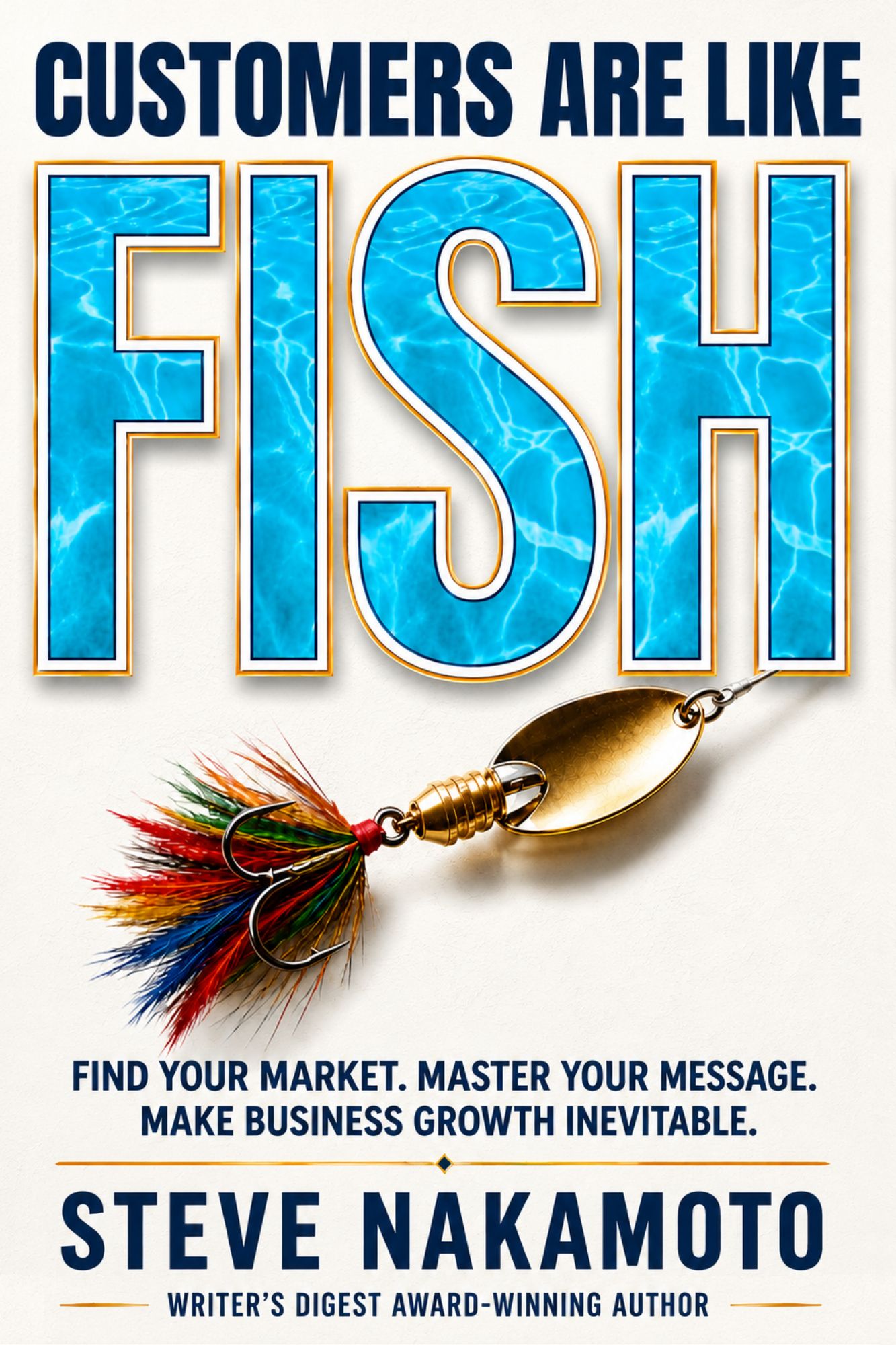 Based on the Customers Are Like Fish frameworkby Steve Nakamoto, Writer's Digest Book Award recipient (2000, Non-Fiction/Self-Help, Men Are Like Fish) and creator of the Customers Are Like Fish framework
A guided 4-stage audit that finds where your growth is leaking and gives you a prioritized plan to make it compound.
Paste your tagline. You'll get an instant clarity read — not a full audit, just the first thing a stranger does or doesn't understand about you.
Ready to push?
Where effort goes
The loop that doesn't stop
What's working against itself
Click "Start My Session" and begin a focused, private conversation. No signup, no forms — just you and the diagnostic.
The strategist guides you through Scaling Readiness, Leverage, Flywheel Design, and Alignment — listening for the weak link behind each answer.
At the end you get a complete Growth Systems Audit: readiness ratings, a visual flywheel, alignment findings, and your five priority moves — as PDF or Markdown.
See a sample auditThis audit applies the principles from Customers Are Like Fish: find your market, master your message, and make business growth inevitable — find the water where your ideal customers already swim, attract them with a message they recognize, and build systems that keep the loop turning.
Writer's Digest Book Award recipient (2000, Non-Fiction/Self-Help, Men Are Like Fish). Customers Are Like Fish is the source of the framework this audit applies.
Every question in the session traces back to one of these three ideas from the book.
Fish where your ideal customers already swim, instead of casting everywhere at once.
Use bait they recognize: a message that names who it's for and what changes for them.
Turn good delivery into a loop — referrals, retention and reach that compound.

Find the water where your fish already swim — stop casting everywhere at once.

Name the 20% of work that moves the wheel, and cut what only feels like progress.

Wire each win into the next turn so momentum builds without you pushing.